The Forgotten Soldiers:
Honoring the Dogs, Horses, and Animals Who Served in War
They didn’t march for medals or glory — they served out of loyalty, courage, and love. This Veterans Day and Memorial Day, Rescued by Rembrandt honors the dogs, horses, and animals who served in war and stood beside soldiers on every battlefield.
They carried no weapons. They wore no rank.
Yet their courage equaled that of any soldier who ever stood in formation.
They didn’t fight for medals, or flags, or nations.
They fought because someone they loved was in danger — and that was reason enough.
From the battlefields of ancient Rome to the deserts of Afghanistan, animals who served in war have stood shoulder to shoulder with humans — racing into fire, through storms, and across oceans of fear. They didn’t know politics or boundaries. They only knew the call of a voice, the scent of their handler, the instinct to protect.
They carried messages through gunfire, hauled supplies across mud and snow, pulled wounded soldiers to safety, and waited beside them in their final moments.
They were the heartbeat that steadied the shaking hands of those who were afraid.
These warriors worked not for glory, but for trust. And in doing so, they earned their place in history — written not in ink, but in loyalty and sacrifice.
As we approach Veterans Day and Memorial Day, we pause to remember not only the men and women who served, but the faithful animals who served in war — the ones whose valor was measured in silence and whose devotion never wavered.
From the First Cavalry to the Front Lines
The bond between human and animal in war stretches back through millennia — a partnership older than armor itself.
For centuries, animals who served in war have adapted to every form of combat — from the age of chariots to the era of satellites.
Horses first appeared in battle around 4000 BCE, changing the world forever. Once yoked to chariots and carts in Mesopotamia and Egypt, they became living engines of speed and power, carrying warriors into the heart of combat. They bore armor, banners, and riders — but most of all, they bore trust.
Dogs, too, marched through the pages of history. Records from ancient Persia and Greece tell of war dogs armored in spiked collars, trained to guard camps, attack enemies, and carry messages through enemy lines. Roman legions marched with Molossian hounds at their sides — massive guardians who would later inspire the mastiffs of today.
But they were not alone.
Camels carried soldiers and water through endless deserts.
Elephants hauled artillery through dense jungles and broke enemy lines in ancient India and Carthage.
Pigeons rose through smoke and gunfire to deliver life-saving messages when all other communication failed.
Even humble mules and donkeys shouldered the weight of supplies, food, and wounded men when machines could not pass.
By World War I, the relationship between soldier and animal had deepened into something sacred. Tens of thousands of dogs served as messengers, sentries, and companions amid the chaos of the trenches. They learned to detect gas before humans could smell it, to find wounded men buried under rubble, and to carry messages when radios went silent.
More than eight million horses served during that same war — pulling artillery, food, and medicine through mud that swallowed machines whole. Most never returned home. Their loss was so great that poets wrote of them with tears instead of ink.
From the ancient cavalry charge to the modern K9 unit — and from the carrier pigeon to the naval dolphin — animals who served in war were not just tools of combat. They were brothers and sisters in service.
They carried the weight of nations, the hope of survival, and the unspoken understanding that loyalty is the purest form of courage.
The Dogs, Horses, and Other Animals Who Served
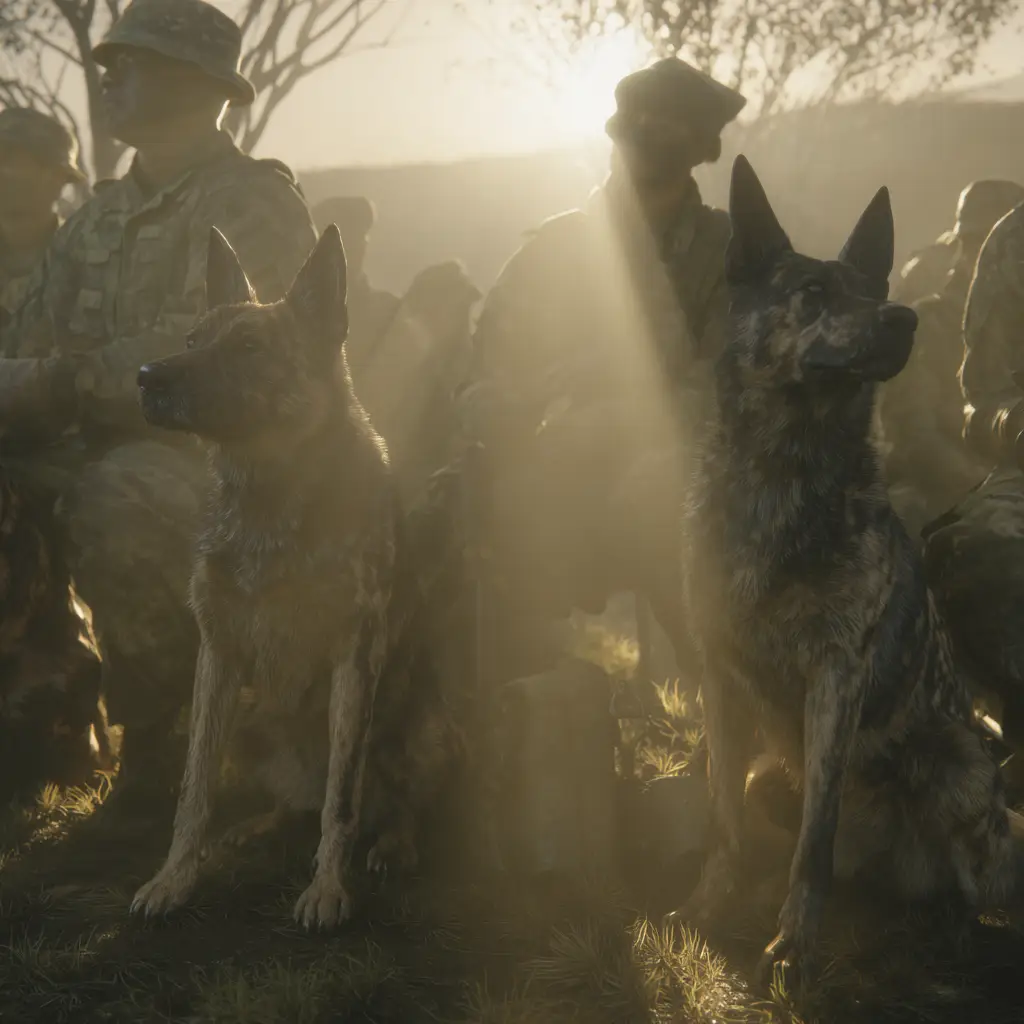
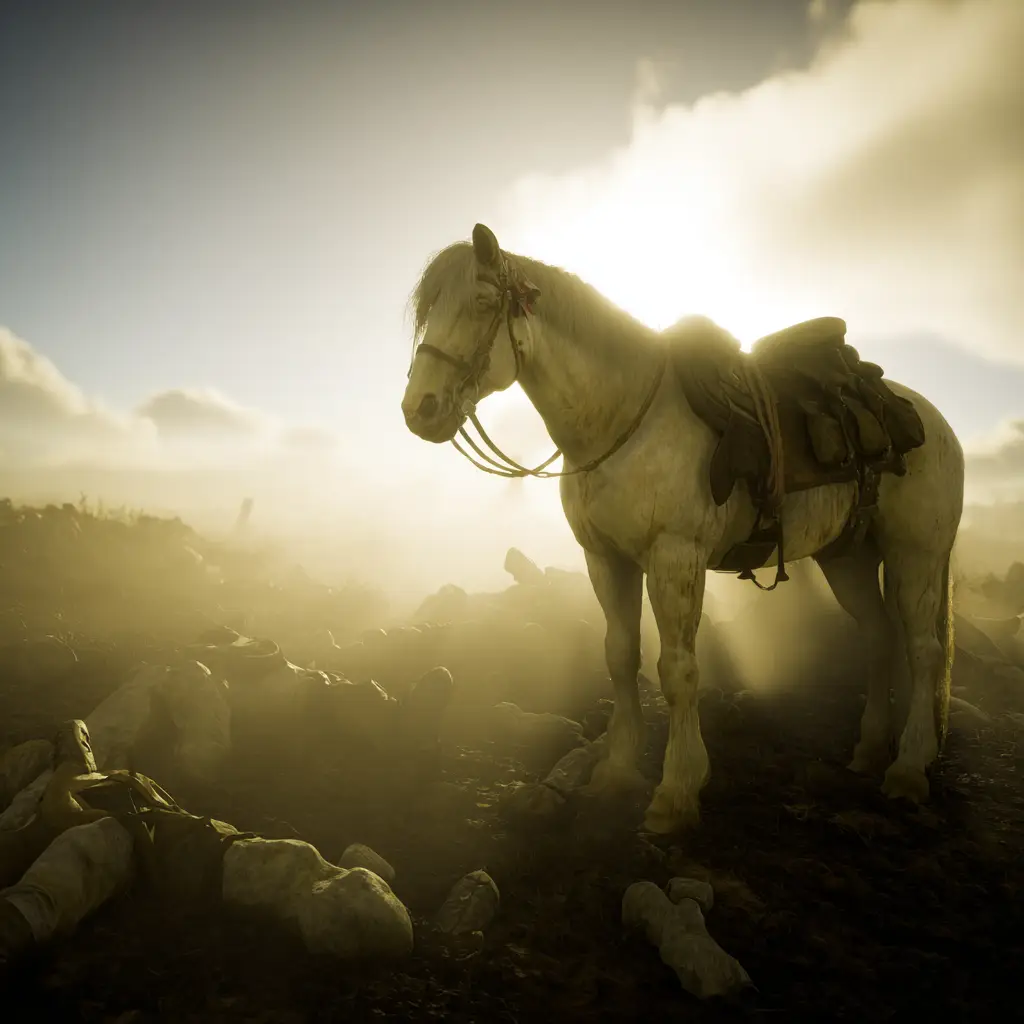
Among all animals who served in war, none were closer to the hearts of soldiers than the dogs and horses who walked beside them.
From fearless scouts to steadfast carriers, they have stood beside soldiers for centuries — driven not by orders, but by loyalty.
Dogs
-
Messengers Carried vital notes through gunfire when radio contact failed.
-
Scouts Detected enemy movements long before soldiers could.
-
Sentries Guarded camps and warned of danger in the dead of night.
-
Rescue Dogs Located wounded soldiers under rubble or deep in forests.
-
Detection Dogs Sniffed out explosives, weapons, and hidden threats.
-
Therapy & Morale Dogs Brought comfort to the wounded and peace amid chaos.
Horses
-
Cavalry Mounts Carried soldiers into battle, deciding victory or defeat.
-
Artillery Pullers Hauled guns, wagons, and supplies across impossible terrain.
-
Ambulance Horses Transported the wounded to safety through mud and smoke.
-
Messenger Horses Raced across fields when machines failed.
Other Animals of War
-
Pigeons Rose through smoke and gunfire as lifesaving couriers when communication collapsed.
-
Camels Carried soldiers, weapons, and water through the deserts of North Africa and the Middle East.
-
Elephants Hauled artillery and built bridges through jungles in World War II.
-
Cats Served aboard ships and in barracks as mascots, rodent catchers, and quiet companions.
-
Dolphins & Sea Lions In modern times, trained for mine detection and diver protection beneath the waves.
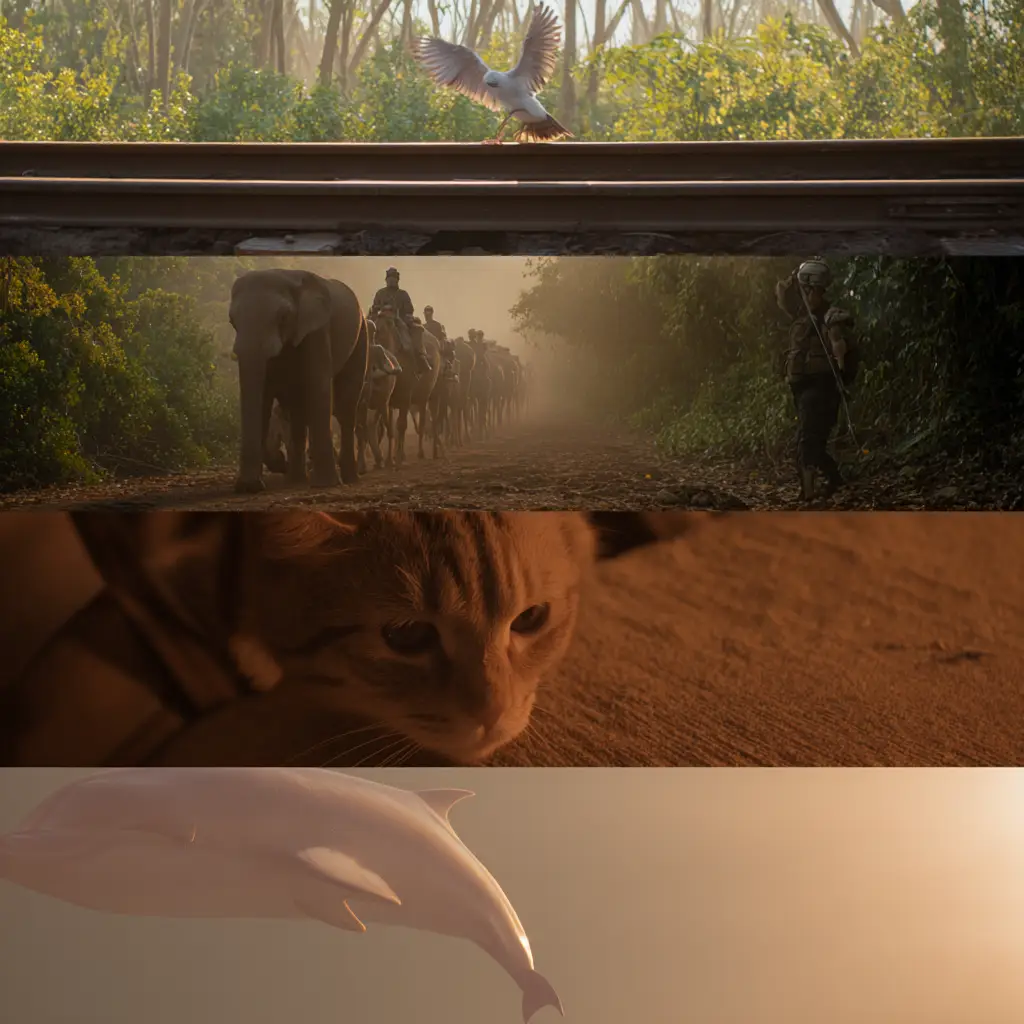
Every species had a purpose.
Whether galloping through smoke, flying over gunfire, or swimming unseen below the surface, animals who served in war all shared one truth: loyalty knows no species.
Some Became Legends
Legendary Dogs
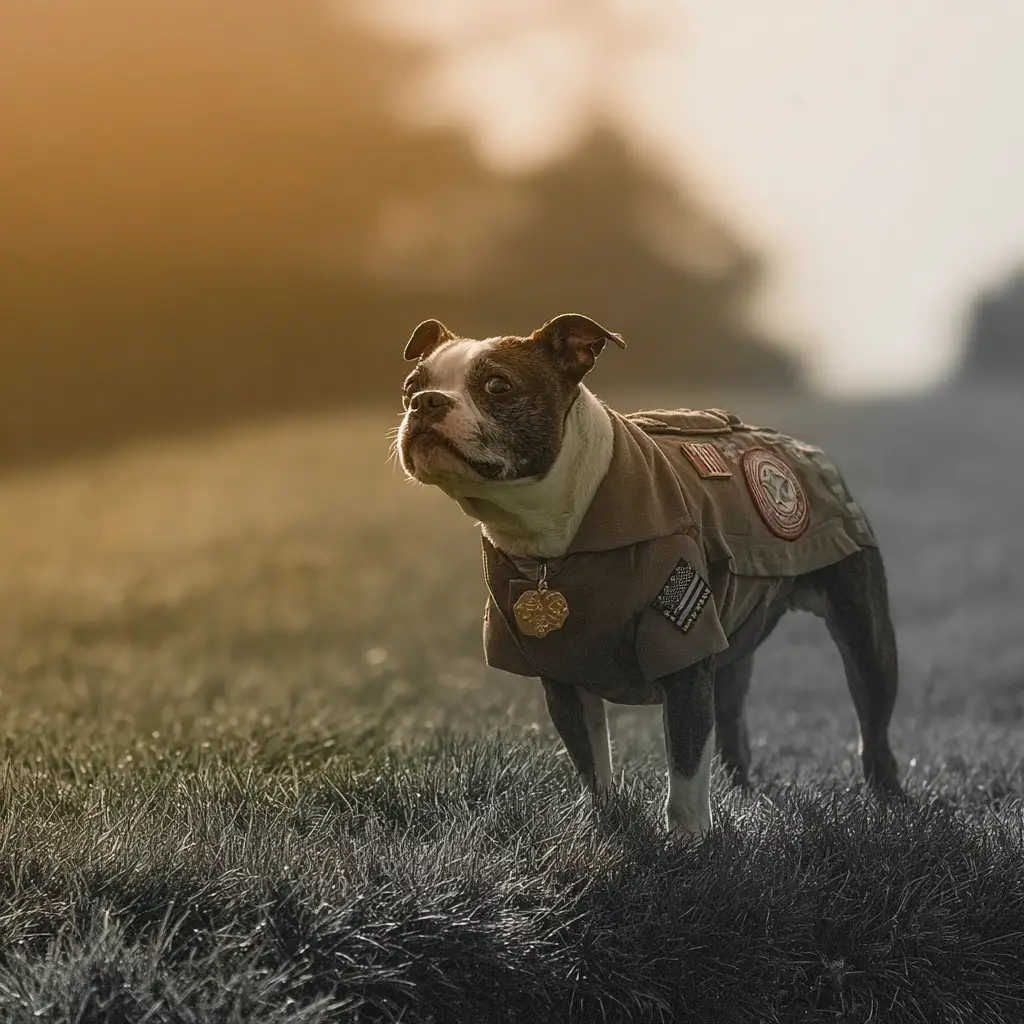
Sergeant Stubby (World War I)
He was small, scrappy, and entirely unplanned — a stray Boston Terrier mix who wandered onto the training grounds of the 102nd Infantry Regiment in 1917. When the soldiers shipped out to France, Stubby stowed away on the troop ship, discovered only after it was too late to turn back.
On the Western Front, he proved his worth beyond measure. Stubby could sense incoming gas attacks before humans could smell them, barking warnings that saved countless lives. He learned to locate wounded men in the trenches, carrying messages tied to his collar through gunfire and chaos.
In one remarkable moment, he single-handedly captured a German spy, grabbing the man by the leg and holding on until U.S. troops arrived. For his bravery, Stubby was promoted to Sergeant — the first dog in American history to receive a military rank through combat.
When the war ended, he marched in parades, met presidents, and slept each night at the foot of his soldier’s bed — a hero who had never once asked to be one.
Chips (World War II)
Chips was a German Shepherd–Husky–Collie mix with unshakable drive and keen intelligence. Donated by his family to the Army’s new “Dogs for Defense” program, he was trained as a sentry dog and assigned to the 3rd Infantry Division.
During the invasion of Sicily in 1943, Chips and his handler came under fire from a hidden machine-gun nest. Without hesitation, the dog broke free, charging straight into the enemy position. The gun went silent moments later. When the soldiers advanced, they found Chips had forced the enemy to surrender.
Wounded in the face and scalp, he refused medical attention until his handler was safe. The next day, he was back on duty.
Chips received the Distinguished Service Cross, Silver Star, and Purple Heart, though those medals were later revoked due to outdated military policy barring animal commendations. Decades later, his courage was officially recognized again with the Animals in War & Peace Medal of Bravery.
He returned home to his family after the war — forever changed, but never forgotten.
Gander (World War II, Canada)
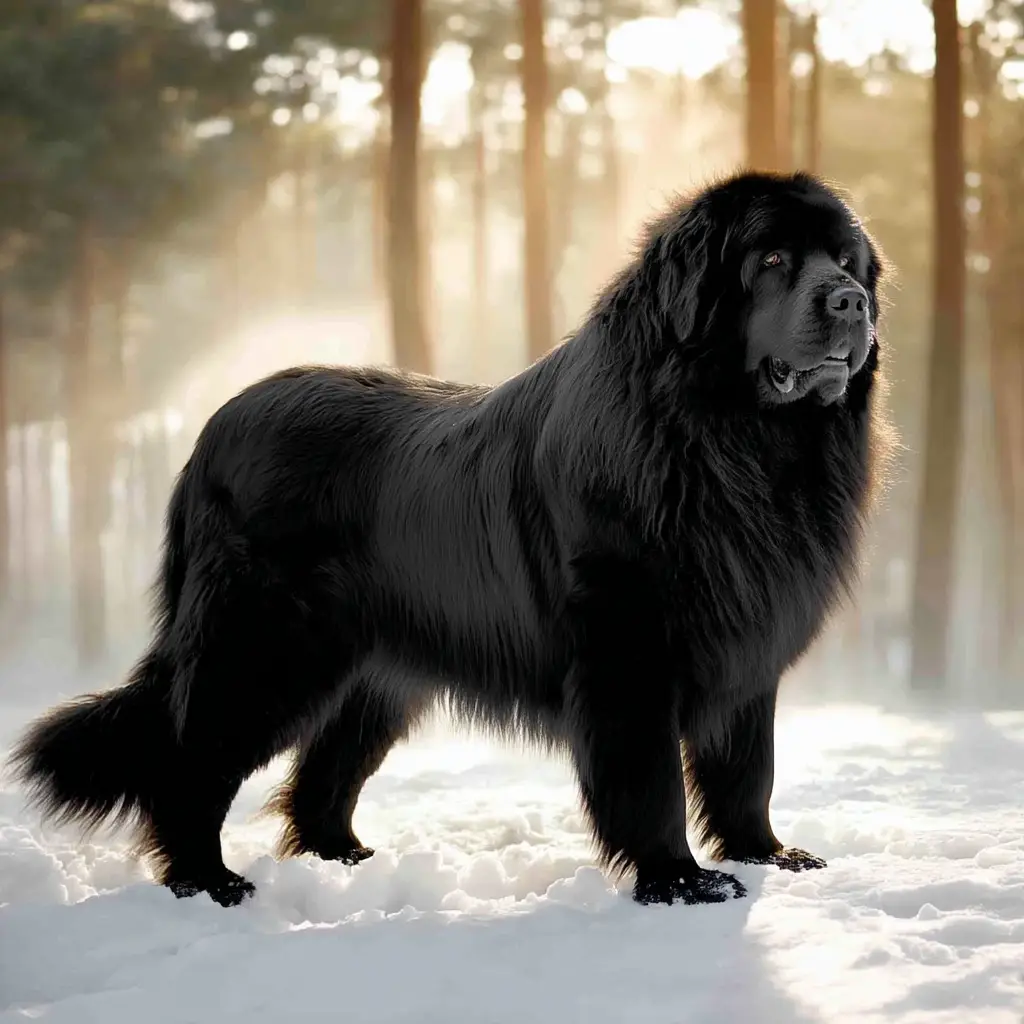
Across the ocean, a massive Newfoundland named Gander became the unlikely hero of the Royal Rifles of Canada. Originally a family pet, he had accidentally scratched a child and faced euthanasia — until soldiers adopted him as their mascot.
When his unit was deployed to Hong Kong in 1941, Gander went with them. He carried messages under fire, guarded the wounded, and once drove off a Japanese ambush with nothing but his sheer size and courage.
In the final hours of the Battle of Lye Mun, a live grenade landed among the men. Without hesitation, Gander grabbed it in his mouth and ran toward the enemy. The explosion took his life but saved his unit.
For his bravery, Gander was posthumously awarded the Dickin Medal, known as the animals’ Victoria Cross. His name is engraved on the Hong Kong Veterans Memorial Wall — proof that heroism sometimes comes wrapped in fur.
Smoky (World War II, Pacific Theater)
She was barely four pounds — a Yorkshire Terrier found in a foxhole in New Guinea in 1944. Soldiers first thought she belonged to the Japanese army, but she had no tags, no home, and no fear.
Smoky quickly became the most beloved member of her unit. She flew on combat missions, parachuted in a special harness, and once crawled through a 70-foot-long drainage pipe carrying a telegraph wire — saving hours of dangerous work and countless lives.
When she wasn’t saving soldiers, she performed tricks to lift morale in hospitals and camps. After the war, she continued her service — becoming one of the first therapy dogs for wounded veterans.
No medals could measure her impact. Smoky proved that even the smallest heart can carry the greatest courage.
Lucca (Afghanistan & Iraq, U.S. Marine Corps)
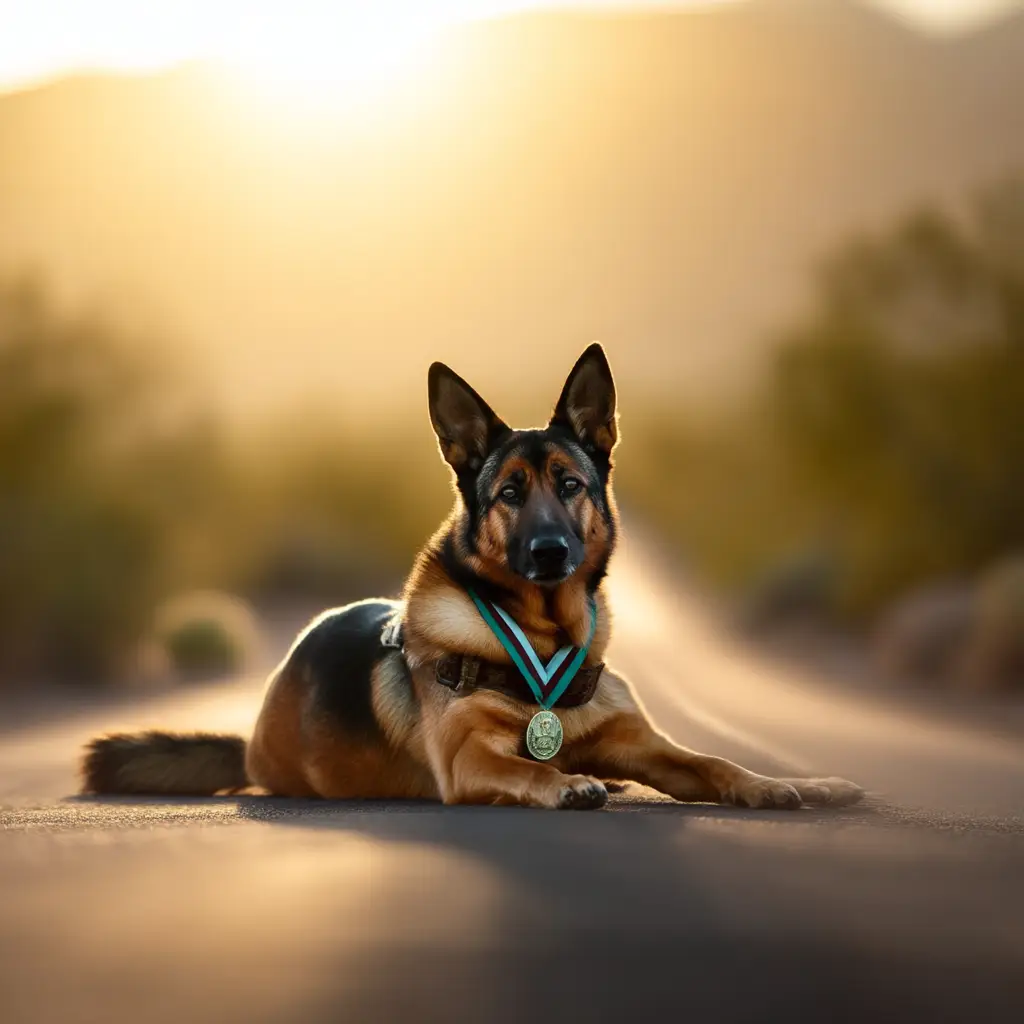
Strong, disciplined, and fiercely loyal, Lucca — a German Shepherd–Belgian Malinois mix — served six years as a bomb-detection dog with the U.S. Marine Corps.
Over 400 missions, she found countless explosive devices and protected every Marine she worked with. Not one soldier was ever harmed on her watch.
On her final patrol in Afghanistan, she located an improvised explosive device — but a secondary blast detonated nearby, costing her a front leg. Even injured, she continued to search the area until her handler was safe.
Lucca recovered and lived out her life as a hero, receiving the Dickin Medal and the love of Marines around the world. Her story reminds us that loyalty doesn’t require words — only heart.
Nemo A534 (Vietnam War, U.S. Air Force)
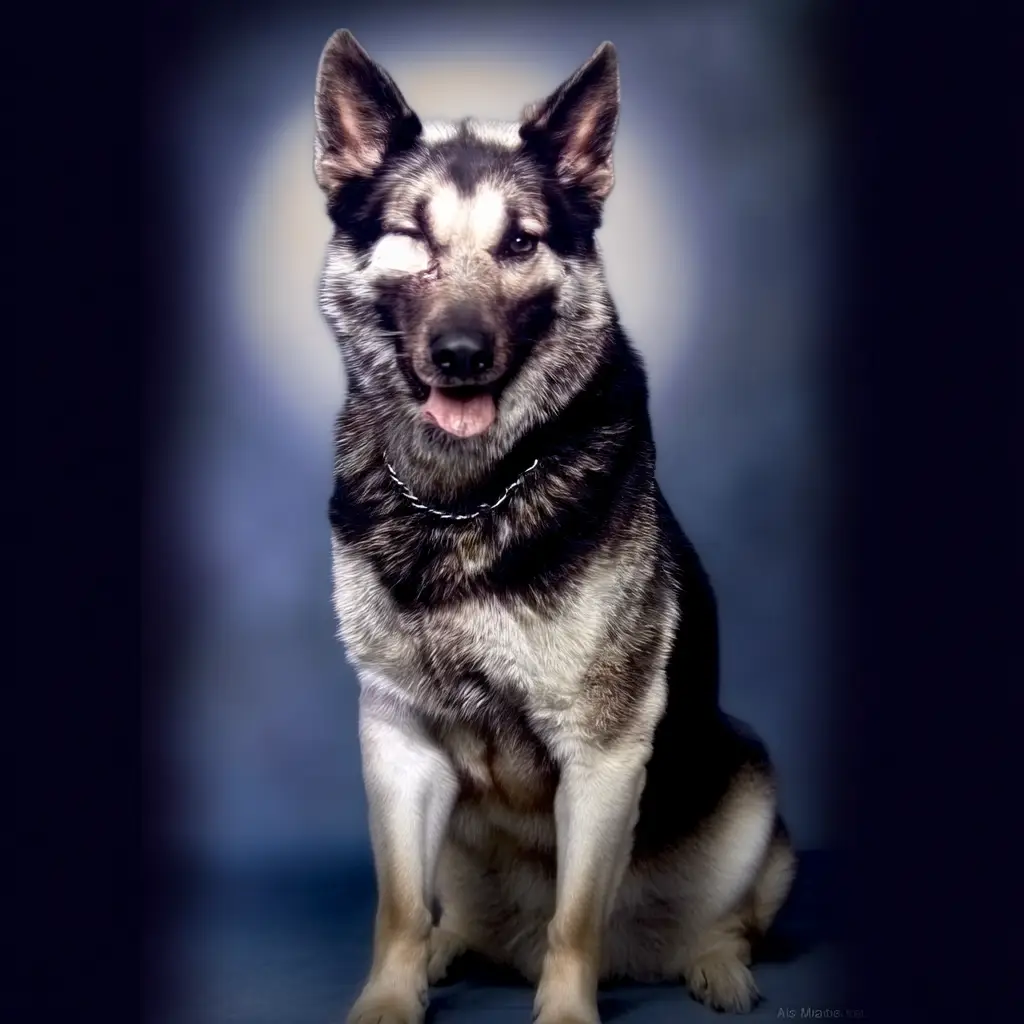
In the darkness outside Tan Son Nhut Air Base in 1966, a German Shepherd named Nemo and his handler came under heavy attack. Nemo took a bullet through the muzzle and lost an eye, yet fought off the enemy long enough for his wounded partner to reach safety.
When reinforcements arrived, they found Nemo lying across his handler’s body — guarding him, bleeding but alive. Both survived, and Nemo became a symbol of the K9 corps’ unwavering devotion. He spent his remaining years helping train new handlers, teaching them what bravery looks like.
Sallie (American Civil War, United States)
She wasn’t born for battle, but she belonged to one.
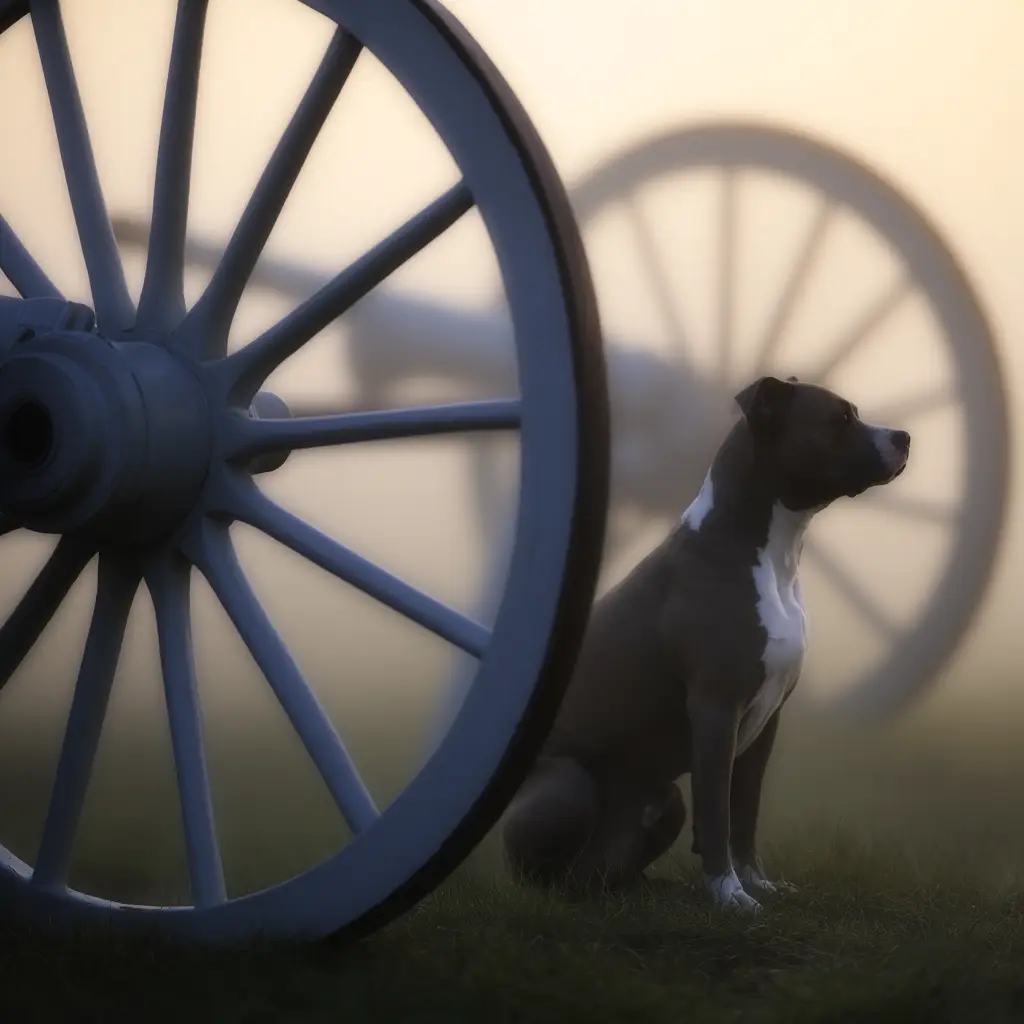
Sallie, a brindle Staffordshire Terrier puppy, was given to the 11th Pennsylvania Volunteer Infantry in 1861. She marched with the men from the day they left home — sleeping beside them, drilling with them, and standing at attention during roll call.
On the battlefield, she barked at the enemy and ran the lines to check on the wounded. At Gettysburg, she stayed behind with the fallen, guarding the bodies of her soldiers for three days until the survivors returned.
Her devotion was so pure that when she was later killed in action, the men buried her on the field where she fell — amid the same comrades she had refused to leave.
Years later, when the 11th Pennsylvania’s monument was raised at Gettysburg, the soldiers insisted that Sallie’s bronze likeness stand at the base, forever keeping watch.
To this day, visitors leave treats and flowers there — for the little dog who proved that loyalty, once given, is never lost.
Cairo (Operation Neptune Spear, 2011)
Nearly a century after Stubby, another dog would step into history — not on the muddy battlefields of Europe, but in the quiet precision of modern warfare.
Cairo, a Belgian Malinois serving with the U.S. Navy SEALs, was part of one of the most daring missions ever undertaken — Operation Neptune Spear, the 2011 raid that led to the capture of Osama bin Laden.
Equipped with advanced body armor, night-vision goggles, and a camera system mounted to his back, Cairo moved through the darkness with silent confidence. His job was to detect hidden dangers, clear routes, and ensure that no threat remained unseen.
In the tension of that night, surrounded by technology and human precision, Cairo’s instincts proved irreplaceable. He was not just another piece of the mission — he was its heartbeat.
When dawn broke and the mission was complete, his service stood as a powerful reminder that courage wears many forms.
Even in an age of drones and satellites, nothing compares to the intuition of a loyal dog — or the unspoken bond between a handler and his companion.
🐾 Did You Know?
Dogs for Defense Program
The U.S. War Dog Program began in 1942.
Known as “Dogs for Defense,” it recruited family pets for military service. Families donated over 40,000 dogs, many trained for patrol, detection, and rescue missions. After the war, some were returned home — with new medals and even more love.
Horses Lost in WWI
In World War I, eight million horses died in service.
The majority weren’t killed by battle, but by exhaustion, hunger, and disease — pulling heavy loads through mud and rain. Soldiers often wrote letters home about “their horses,” describing them as friends, not tools.
Purple Poppy Day
The Purple Poppy honors animal veterans.
While red poppies remember human soldiers, purple poppies commemorate the animals who served beside them. Each year, they’re worn around February 24th — Purple Poppy Day in Australia and the U.K.
Veterans Helped by Service Animals (Today)
Service animals continue to help veterans today.
Modern therapy dogs and equine programs assist thousands of veterans with PTSD and physical rehabilitation — proving that even after the guns fall silent, the bond between soldier and animal never fades.
Sergeant Reckless (Korean War, U.S. Marine Corps)
She was a small Mongolian mare with a big heart, purchased from a Korean boy for $250 — and she would become one of the most decorated horses in U.S. military history.
During the Battle of Outpost Vegas in 1953, Reckless made 51 solo trips through enemy fire to deliver ammunition and carry wounded Marines back to safety. Shells burst around her; she never faltered.
Her unit loved her like one of their own — feeding her scrambled eggs, beer, and even coffee with cream. For her bravery, Reckless was promoted to Sergeant, awarded two Purple Hearts, and later given full military honors.
She proved that courage has no species, and that heroes sometimes wear saddles instead of boots.
Comanche (American Civil War, USA)
He was the lone survivor of Custer’s 7th Cavalry detachment at the Battle of Little Bighorn. Found wounded but standing, Comanche became a living symbol of endurance.
He was given the honorary title of Second Commanding Officer, allowed to live freely and never ridden again. When he died in 1891, he was given a full military funeral — one of the first ever for a horse. His preserved remains now stand at the University of Kansas, still watching over the living with silent dignity.
Warrior (World War I, United Kingdom)
He was called “the horse the Germans couldn’t kill.”
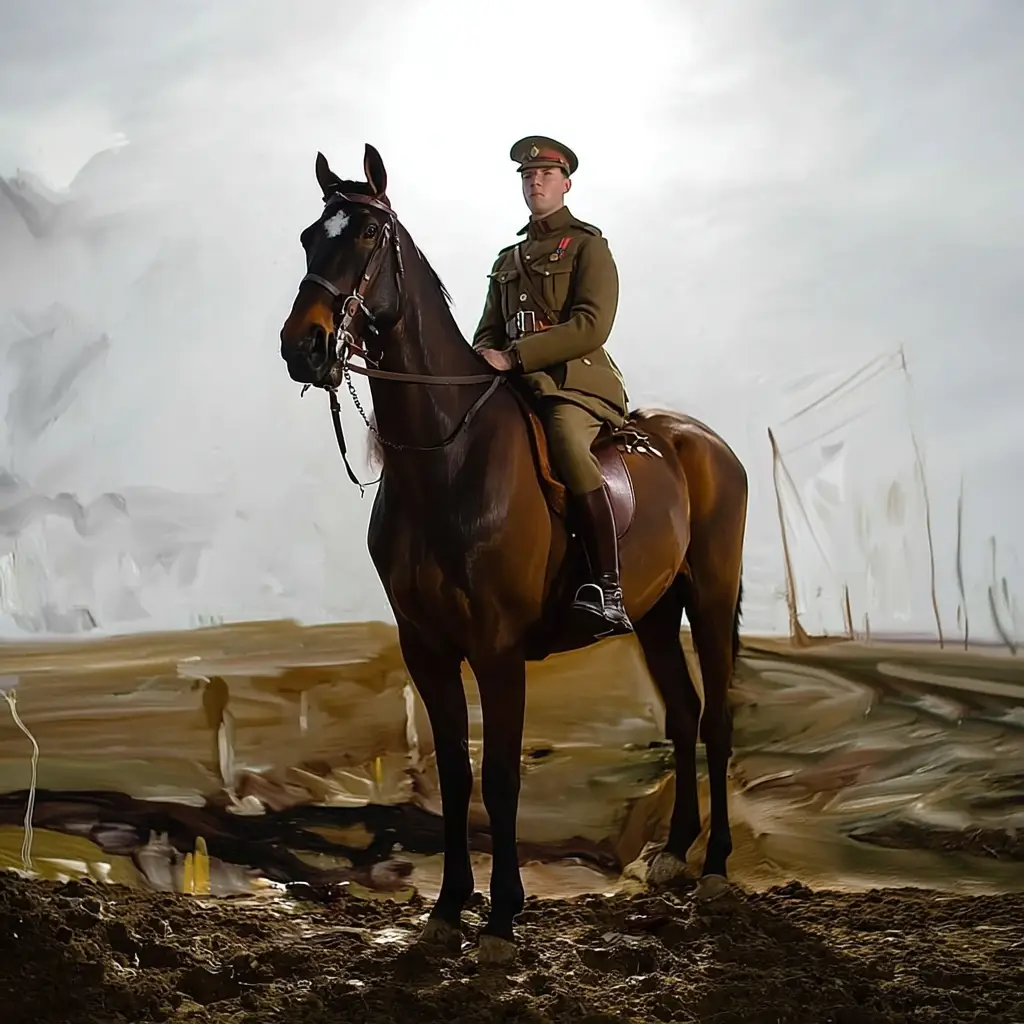
A bay Thoroughbred belonging to General Jack Seely, Warrior served on the Western Front from 1914 to 1918 — through shellfire, gas attacks, and blizzards that claimed thousands.
At Mons, Ypres, the Somme, and Passchendaele, he galloped through explosions and chaos with Seely in the saddle, carrying orders, leading charges, and bringing wounded men to safety.
Despite countless close calls, Warrior survived it all. When so many fell, he stood as a symbol of endurance — mud-covered, battle-hardened, and still unbroken.
After the war, he returned home to the Isle of Wight, where he lived peacefully until the age of 33. In 2014, he was posthumously awarded the Dickin Medal, recognizing his service nearly a century after his final charge.
His story became legend — proof that courage doesn’t fade with time, and that some heroes are made of muscle, breath, and unyielding spirit.
The Dickin Medal: The Animals’ Victoria Cross
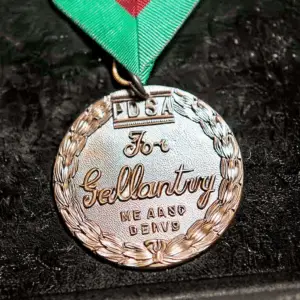
Created in 1943 by Maria Dickin, founder of the People’s Dispensary for Sick Animals (PDSA), the Dickin Medal honors extraordinary bravery among animals serving in military conflict. Often called “the animals’ Victoria Cross,” it has been awarded to dogs, horses, pigeons, and even a cat — each recognized for courage, devotion, and service beyond measure.
Their stories remind us that heroism is not limited by species — only by spirit.
Learn more and explore the full list of recipients here:
👉 PDSA Dickin Medal Recipients
Cher Ami (World War I, U.S. Army Signal Corps)
Her name means “Dear Friend.” During the bloody days of 1918, when communication lines were shattered and soldiers were cut off behind enemy fire, Cher Ami carried the hope of nearly 200 men.
She flew through gunfire, blinded in one eye and shot through the breast, yet delivered a message tied to her shattered leg:
“We are along the road parallel to 276.4. Our own artillery is dropping a barrage directly on us. For heaven’s sake, stop it.”
The shelling ceased, and 194 soldiers of the “Lost Battalion” were saved.
When rescuers found her, she was barely alive — but she had done her duty. Cher Ami received the Croix de Guerre and lived out her days as a decorated veteran, a tiny bird who carried the weight of an army.
GI Joe (World War II, Italy)
Another feathered hero, GI Joe was a British-trained pigeon assigned to the U.S. Army Signal Corps in 1943.
When British troops recaptured the village of Calvi Vecchia ahead of schedule, an Allied airstrike was still on its way. Radios had failed, time was running out. GI Joe was released with a desperate message strapped to his leg.
He flew the 20 miles in just over 20 minutes — arriving moments before the bombers took off. His message halted the attack and saved more than 1,000 lives.
For his service, GI Joe was awarded the Dickin Medal — proof that sometimes the smallest wings can carry the greatest salvation.
Simon (Royal Navy, HMS Amethyst, 1949)
Amid the Yangtze River Incident, where the British frigate HMS Amethyst came under relentless shellfire, a young black-and-white cat named Simon became the ship’s quiet guardian.
Despite being wounded by shrapnel, Simon continued his duties — catching rats that threatened the crew’s food stores, comforting sailors in the chaos, and bringing hope to those trapped below deck.
His courage and companionship earned him the Dickin Medal, the only cat ever to receive it.
When he passed, sailors lined the docks for his funeral. His tombstone still reads:
“Throughout the Yangtze Incident, his behavior was of the highest order.”
Unsinkable Sam (World War II, German & British Navies)
If ever there was a legend of survival, it was Unsinkable Sam — a black-and-white cat who served on three warships and lived to tell the tale.
He began aboard the German battleship Bismarck. When it was sunk in 1941, only 118 of 2,200 crew survived — among them, Sam, found clinging to a plank by British sailors.
He was adopted onto the HMS Cossack, which was torpedoed months later. Again, Sam was rescued.
Transferred to the HMS Ark Royal, he endured yet another sinking before finally being retired to a quiet home in Gibraltar.
He became a naval mascot of both fleets — a reminder that some souls truly refuse to sink.
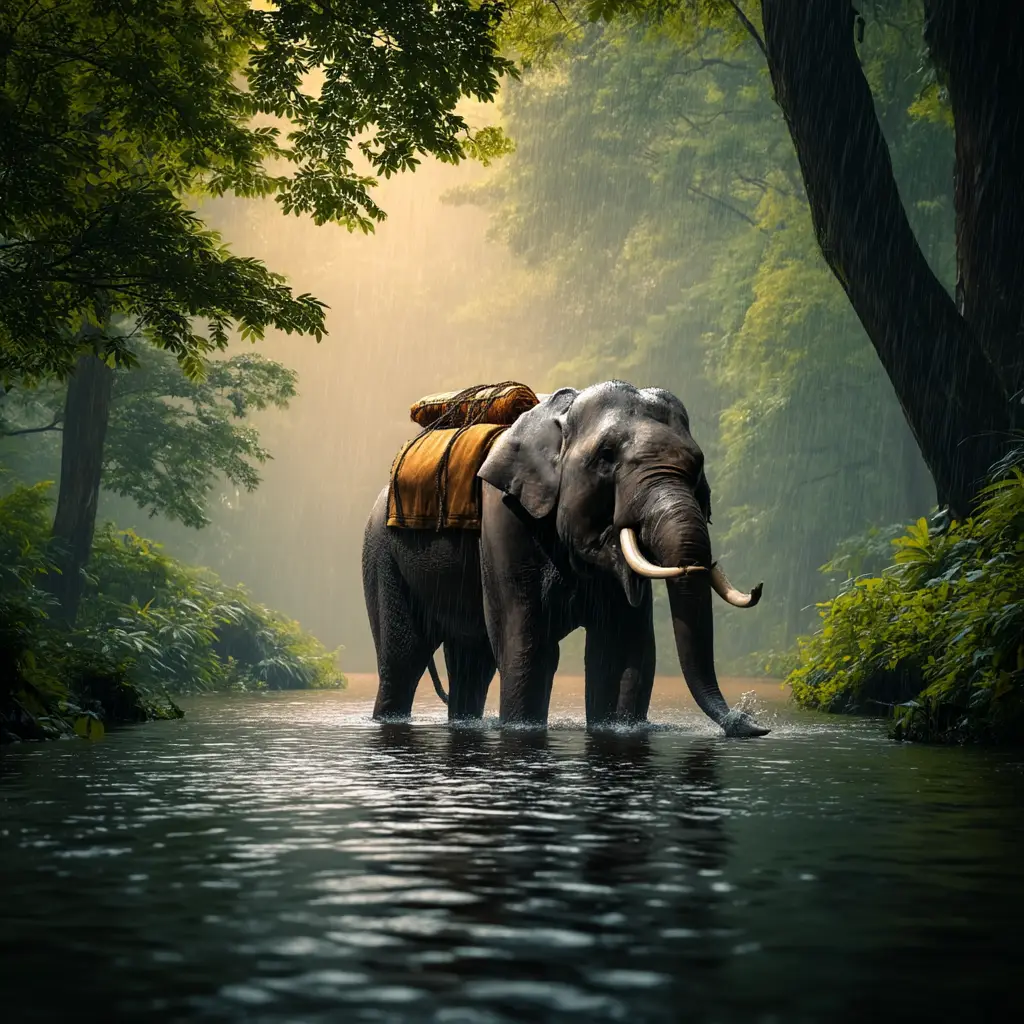
Lin Wang (World War II – Taiwan)
In the jungles of Burma, a young Asian elephant named Lin Wang was captured from Japanese forces and joined the Allied supply convoys.
He hauled artillery and supplies across terrain that broke vehicles, crossing rivers and mountains for thousands of miles.
After the war, he was brought to Taiwan and became a beloved national figure — a living monument to endurance and the gentle strength of those who serve without recognition.
He lived to the age of 86, known as “Grandpa Lin,” still remembered every year on War Animal Day.
Jock the Mule (World War II, Burma)
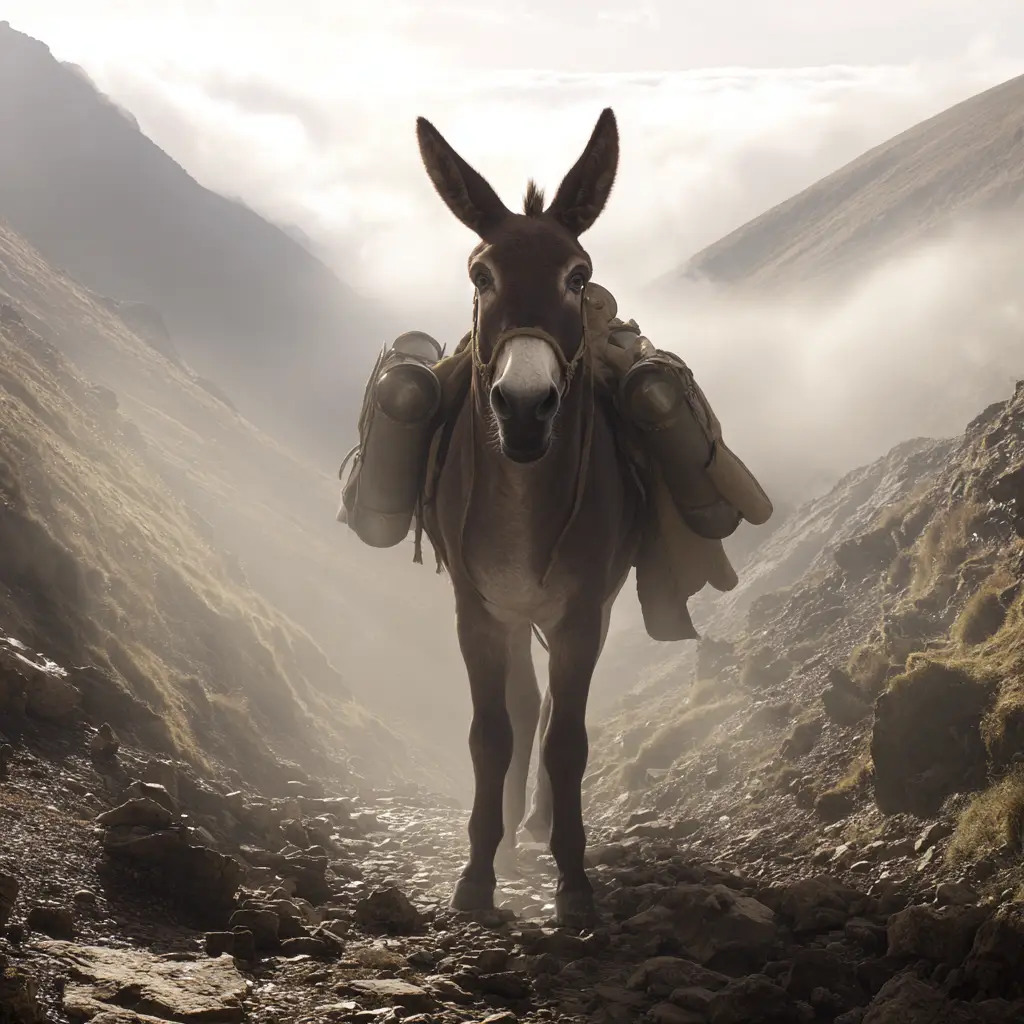
Among the British Chindits — the long-range jungle fighters of Burma — was Jock, a sure-footed mule who carried ammunition through monsoon rains and thick bamboo. When the unit was ambushed, Jock stayed calm under fire, refusing to abandon his handler.
He became a symbol of steadfast courage, representing the countless mules and donkeys who labored without complaint, often dying where they fell.
In their strength, the soldiers found resolve.
K-Dog & Tuffy (Modern Era, U.S. Navy)
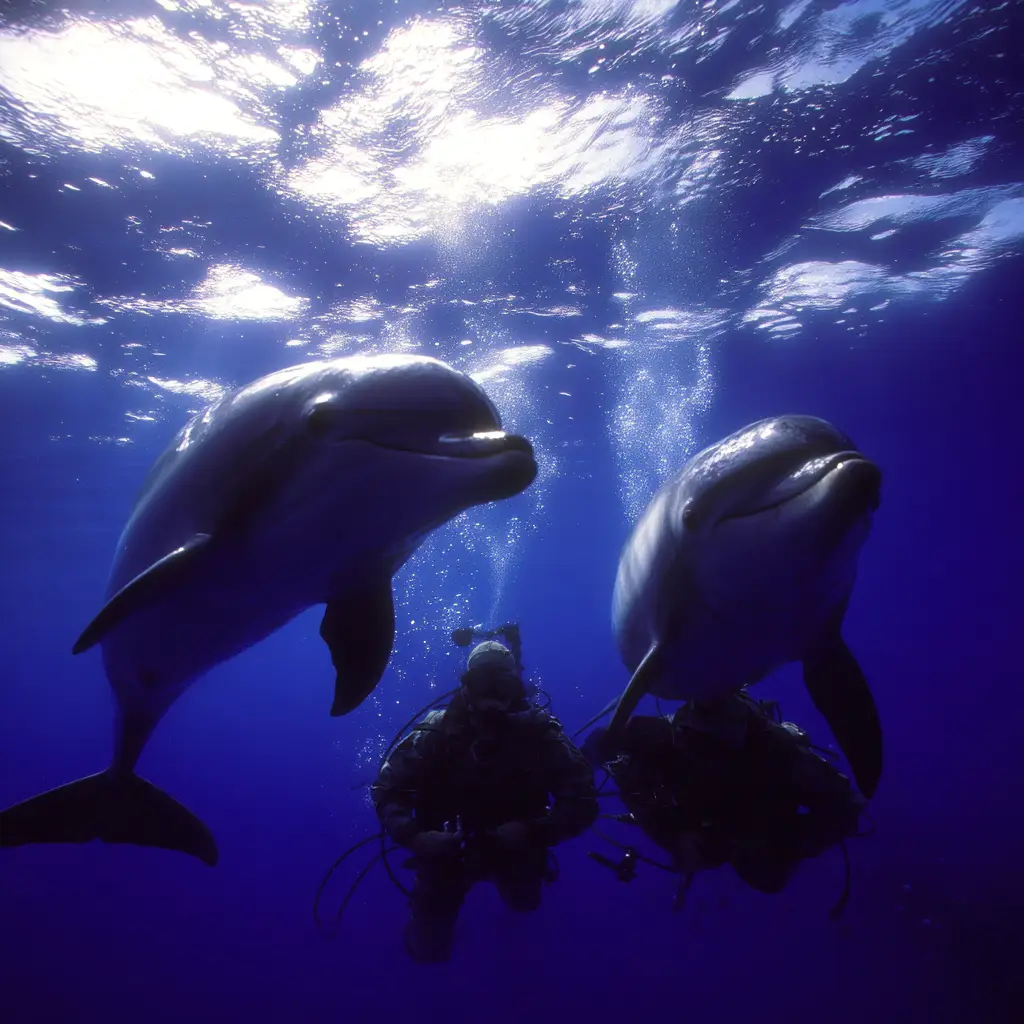
Below the surface, in the quiet dark of the ocean, two bottlenose dolphins named K-Dog and Tuffy served a mission few could imagine.
Trained by the U.S. Navy’s Marine Mammal Program, they used their natural sonar to locate underwater explosives, guard harbors, and guide divers safely through danger.
K-Dog was deployed during Operation Iraqi Freedom, detecting live mines in the murky waters of Umm Qasr and clearing the way for coalition ships.
Tuffy, decades earlier, was part of the Navy’s pioneering deep-sea recovery tests — carrying tools and messages to divers working hundreds of feet below the surface.
Their precision and courage saved lives and reshaped naval operations, proving that even in an age of machines, nature’s design remains unmatched.
They remind us that courage doesn’t end with land or sky — it swims silently beneath the waves.
Each of these animals — pigeon, cat, mule, elephant, and dolphin alike — carried a part of humanity’s story.
They served without promise of glory, yet they changed the course of history through loyalty alone.
From foxholes to flight decks, from trenches to tide pools, they shared one creed:
Duty. Trust. And love without condition.
Legacy Today
Even now, animals who served in war are honored through K9 units, therapy programs, and search-and-rescue work that continues their mission of service.
Each modern service animal carries within them a lineage of courage older than any flag — a living echo of those who once ran through fire and thunder.
Through every bark, every hoofbeat, and every heartbeat in service, their story continues — not as a memory, but as a promise.
🐾 Did You Know?
U.S. dogs served in the Vietnam War.
Vietnam War Dogs
Trained as scouts, sentries, and trackers, these dogs saved an estimated 10,000 human lives. Only a few returned home — many were left behind due to outdated military policies, a loss later recognized as a national heartbreak.
Horses in WWII
Horses were still in active military use as late as World War II.
Though tanks had replaced cavalry charges, horses continued to haul artillery and transport supplies through terrain where machines failed — proving their worth right to the end.
Soldiers saved by Cher Ami’s message
Pigeons were decorated war heroes too.
During World War I, homing pigeons carried life-saving messages when telegraphs were cut. One pigeon, Cher Ami, delivered a critical note that saved nearly 200 soldiers — despite being shot and badly wounded in flight.
Dogs trained in pairs for redundancy and safety
Messenger dogs were trained in pairs.
If one was injured or disoriented, the other would guide them both to safety. Handlers called them “living communication lines” in the days before radios were reliable.
Memorials to the Brave
Across the Rainbow Bridge
In the quiet between the bugle calls and folded flags, we imagine them —
running free once more, no longer burdened by the weight of war.
Across the Rainbow Bridge, the animals who served in war stand side by side — their duty done, their loyalty eternal.
They stand at attention not for orders, but for love. They wait for every voice they once knew, for every heartbeat they once guarded.
This Veterans Day and Memorial Day, we remember all who served —
the soldiers, the handlers, and the animals who shared their battles.
“They asked for nothing but love, and gave everything in return.
Their courage was not commanded — it was given.”
Explore More Rainbow Bridge Tributes

If your heart is still heavy with grief, please consider one of our Grief Companions — gentle reflections and stories to help you heal. A portion of every sale is donated to support Rescued by Rembrandt and its mission to help rescue animals find their forever homes.
Partner Organizations
Rescued by Rembrandt is proud to partner with these firms